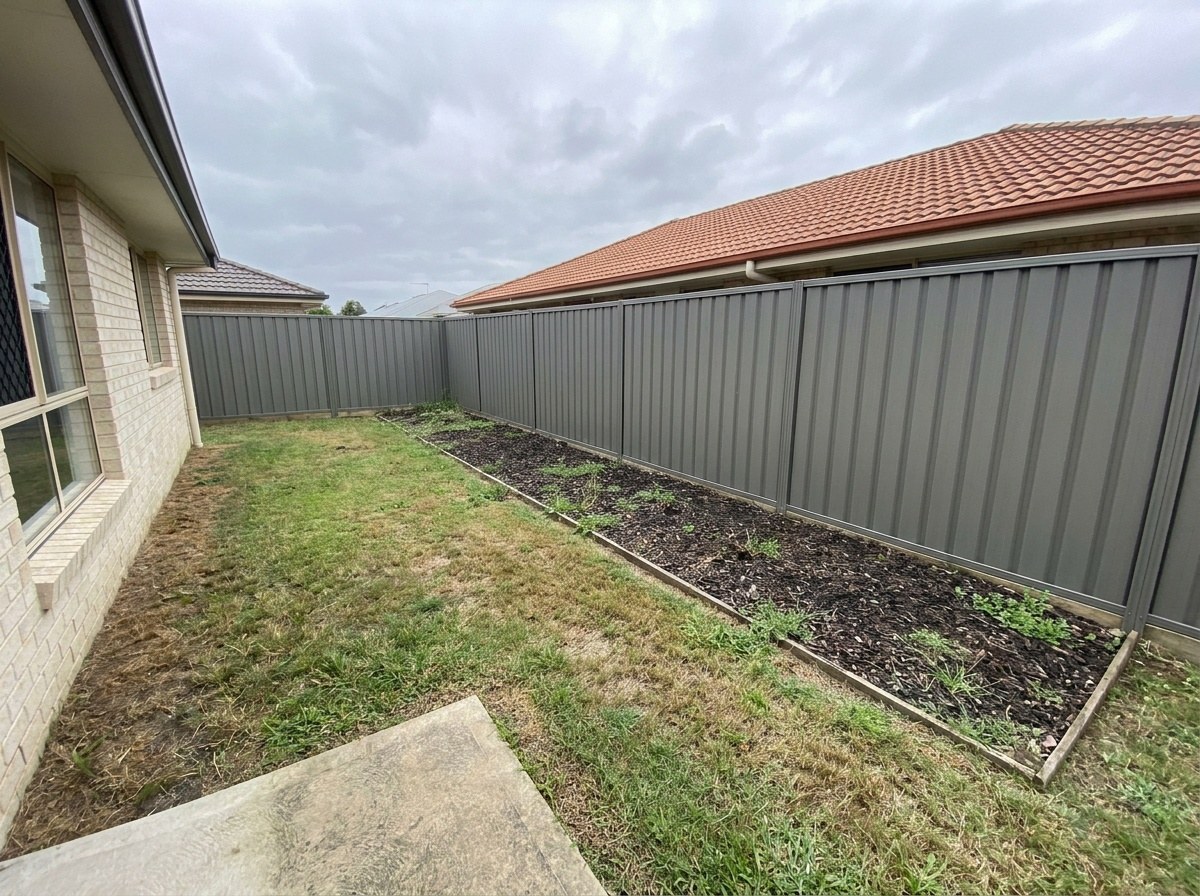
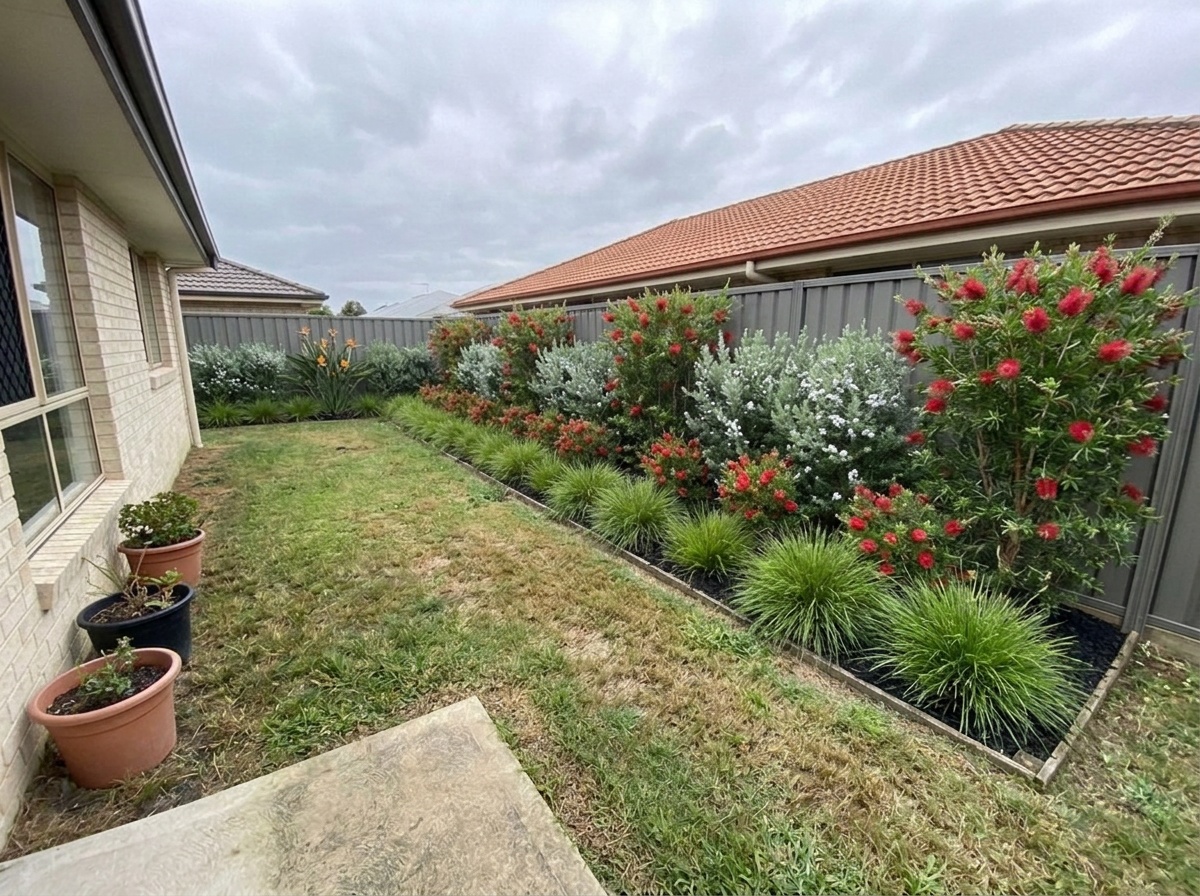
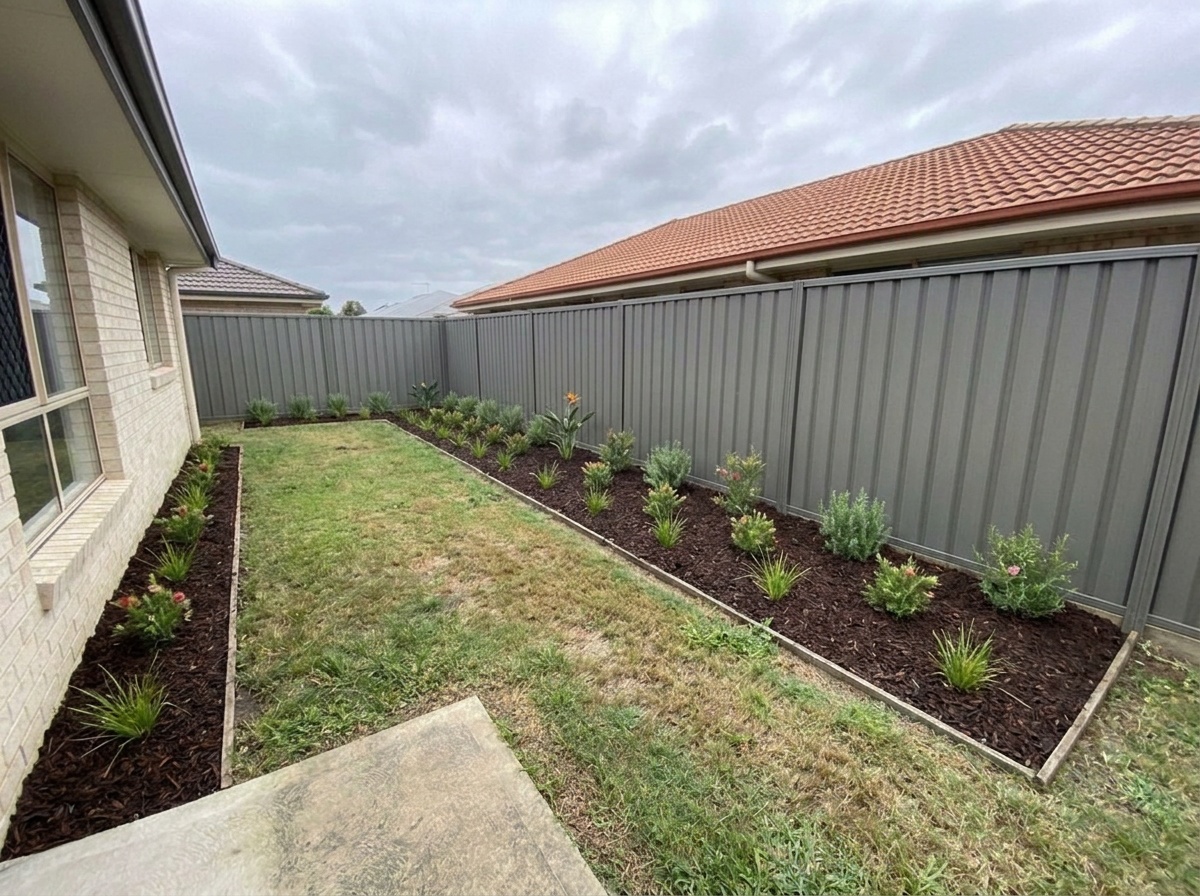
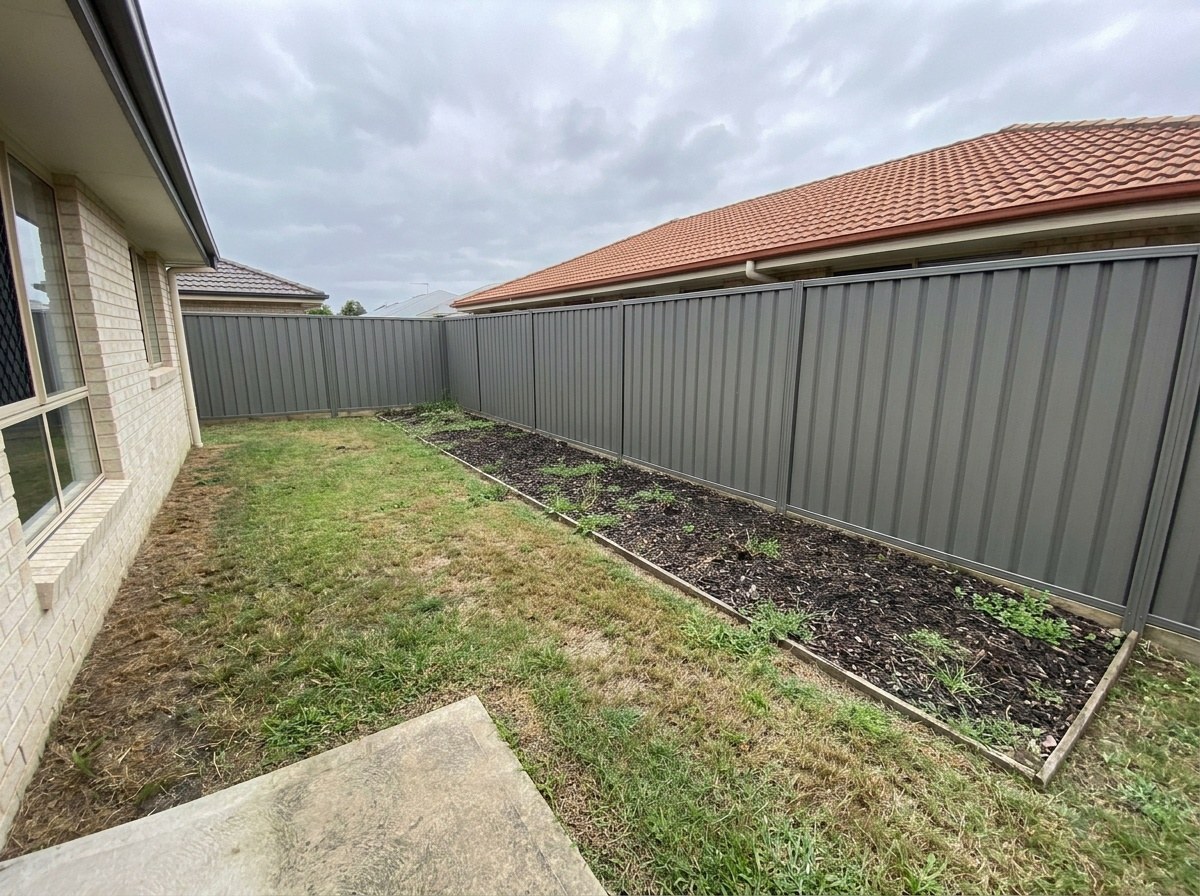
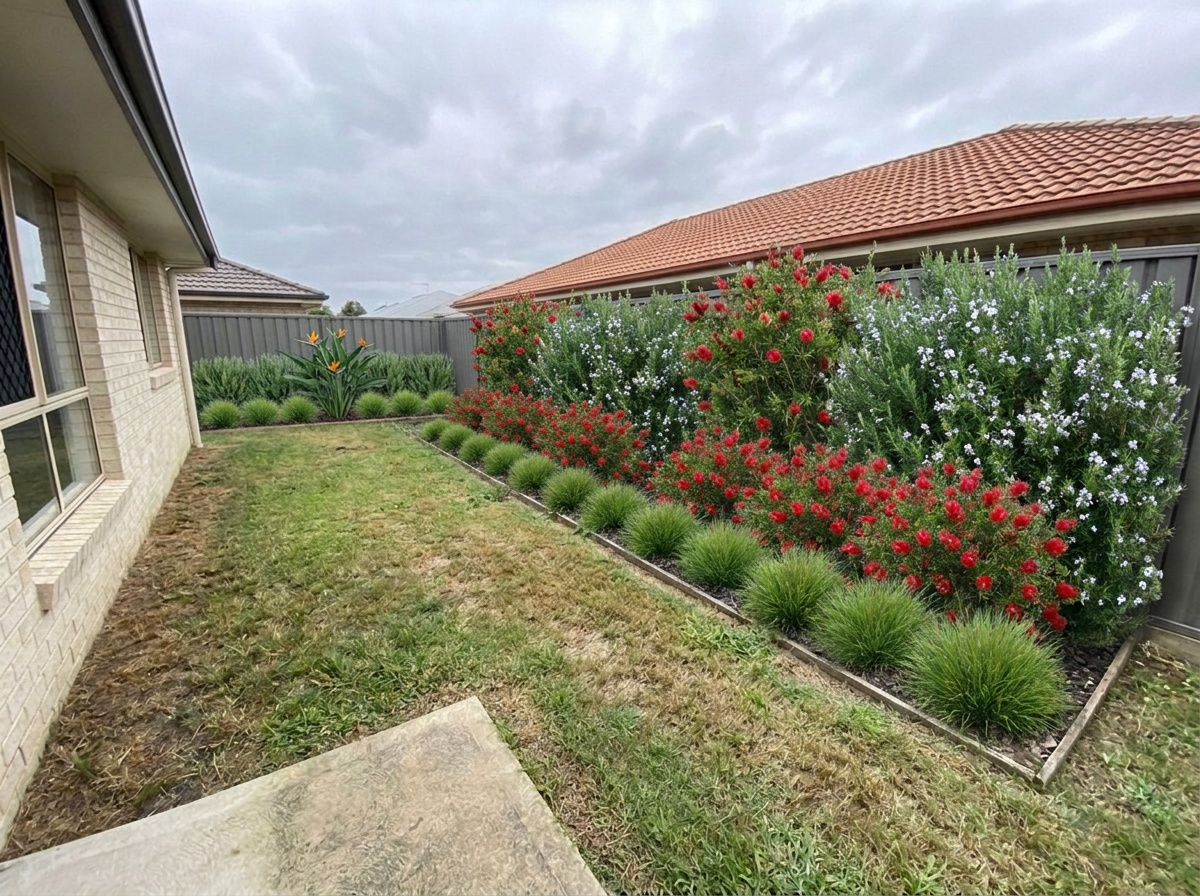
A sample plan for an example backyard. Yours is designed for your own garden, from your photos.
<>
BeforeAt 2 to 3 years
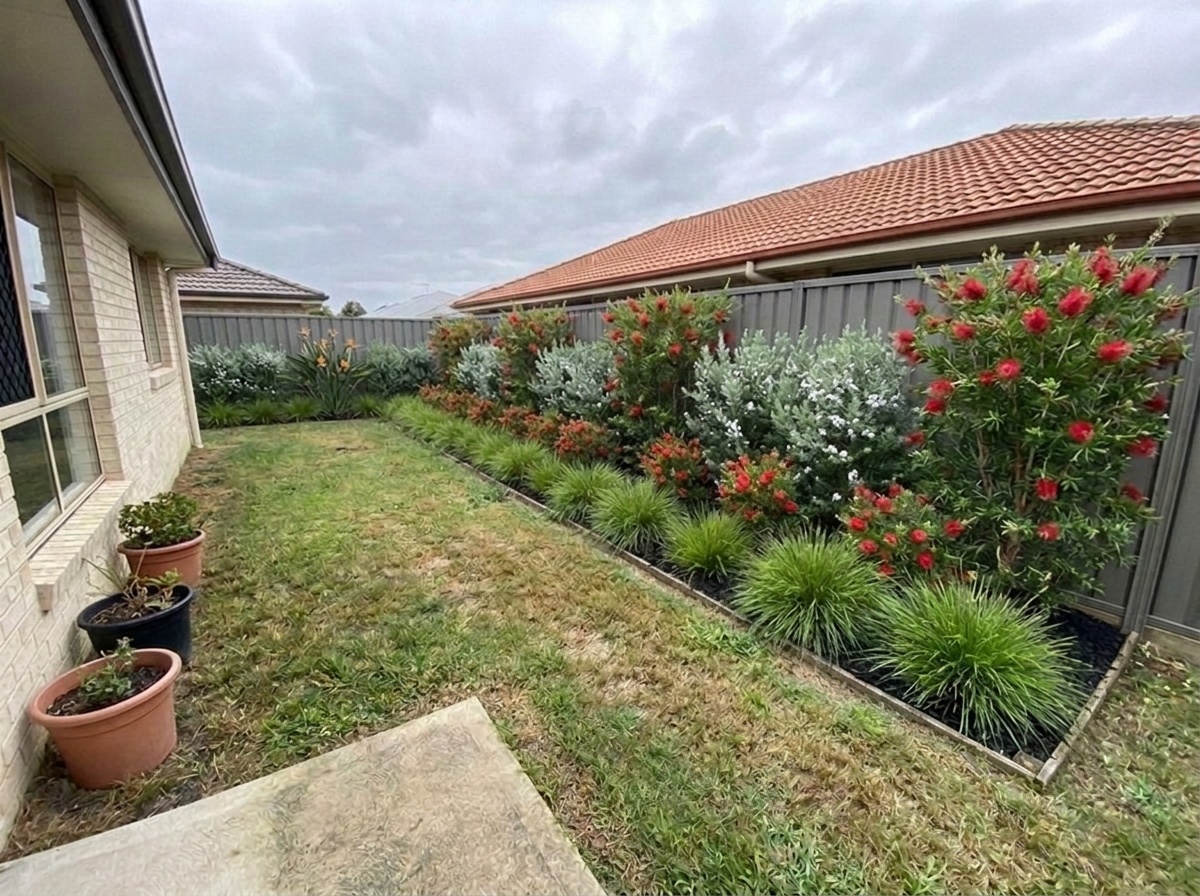
Your own photo, and the plan grown in at about two to three years. Drag to compare.
<>
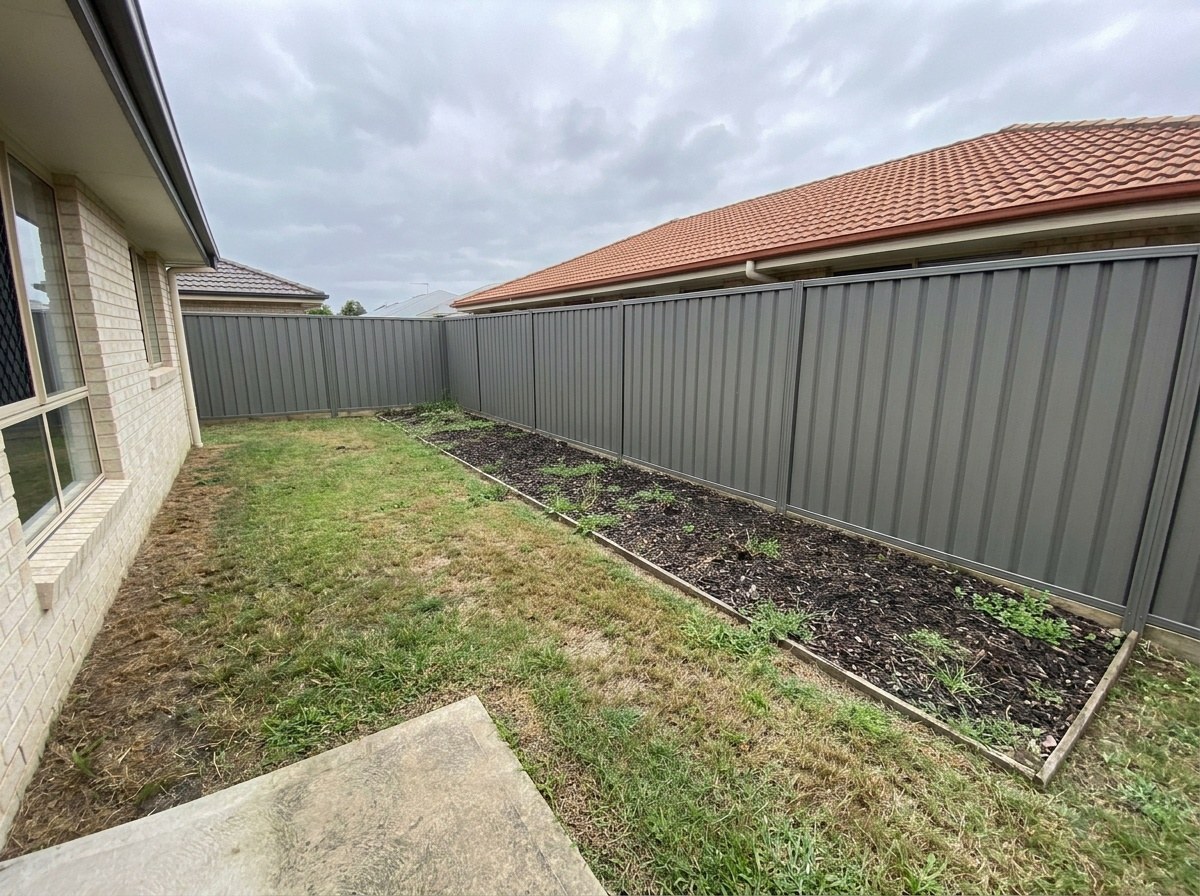
BeforePlanting day
Day one at the Grow-in sizes.
<>
BeforeAt 2 to 3 years
<>
BeforeAt 2 to 3 years
Every angle you sent, and day one. Drag any of them.
This is what you get.
A soft coastal screen of weeping bottlebrush and grey-green coastal rosemary lines both fences, with red and orange flowers through the year. A low edge of fine lomandra and dwarf bottlebrush finishes the beds, and a Bird of Paradise anchors the end view.
your pick
Grow-in
The smaller sizes, the cheaper way. Looks like the picture in two to three years.
Retail $1,315.65
$877.19 at trade for 49 plants
You save $438.46
Instant
The same plan at bigger sizes, so it looks finished on day one.
Retail $2,528.35
$1,685.73 at trade for 55 plants
You save $842.62
4.9 stars from 12,000+ verified reviews30-day healthy plant guaranteeFreight passed through at cost
Every plant priced at trade. Freight quoted at checkout at cost.
What you told us
You want a coastal screen to about 2 m along your fences, with plenty of colour, no spiky plants and almost no upkeep. This plan fills your existing timber-edged bed and adds a new bed along the back fence.
Side fence bed (existing timber-edged bed)
12 m x 1.2 m, the existing edged bed (depth measure to confirm)
From above: the fence along the top, 12 m long and 1.2 m deep, each circle one plant. Depth stretched so the rows read clearly.
2Callistemon Prolific3Coastal Rosemary4Little John Bottlebrush5Tanika® Lomandra
Back layer, against the fence
26 x Callistemon Prolific
Callistemon viminalis
Grow-in 200mm, Instant 250mm. 200 cm apart, grows to 2m to 4m.
Weeping bottlebrush lifts above the fence line and flowers red-pink in spring and autumn.
Back row, 0.4 m off the fence, first plant 0.5 m from the back fence end, then every 2 m, alternating with Coastal Rosemary.
2 Callistemon Prolific6 plants: 1 x 200mm (Pack of 6)
$217.95$145.31
3 Coastal Rosemary12 plants: 2 x 200mm (Pack of 6)
$419.90$279.96
4 Little John Bottlebrush10 plants: 1 x 140mm (Pack of 10)
$197.95$131.98
5 Tanika® Lomandra20 plants: 2 x 140mm (Pack of 10)
$317.90$211.96
Plants, 49 of them, at retail
$1,315.65
Trade pricing
-$438.46
Plants at trade
$877.19
Planting crew
$2,035.00
To pay at checkout
$877.19
Freight
quoted at checkout, at cost
1 Bird of Paradise1 plants: 1 x 400mm
$396.95$264.65
2 Callistemon Prolific6 plants: 2 x 250mm (Pack of 3)
$445.90$297.30
3 Coastal Rosemary12 plants: 4 x 250mm (Pack of 3)
$767.80$511.92
4 Little John Bottlebrush12 plants: 2 x 200mm (Pack of 6)
$417.90$278.62
5 Tanika® Lomandra24 plants: 4 x 180mm (Pack of 6)
$499.80$333.24
Plants, 55 of them, at retail
$2,528.35
Trade pricing
-$842.62
Plants at trade
$1,685.73
Planting crew
$4,540.00
To pay at checkout
$1,685.73
Freight
quoted at checkout, at cost
Planting day, step by step
Weed the existing bed fully. Mark out the new back bed at 6 m x 1.5 m, strip the turf and dig the soil over.
Your soil is sandy, so dig 50 to 100 mm of compost into both beds and add a soil wetting agent.
Run a string line 0.4 m off the side fence and 0.5 m off the back fence, then set out every pot at the spacings on the map before digging.
Plant the back rows first, then the Bird of Paradise, then the front rows.
Soak each pot in a bucket first. Dig holes twice as wide as the pot and plant at the same depth as in the pot, never deeper.
Water each plant in well with a seaweed solution, even if the soil looks damp.
Lay drip line along each row before mulching, two lines in the side bed and two in the back bed.
Spread 75 mm of mulch and keep it 50 to 100 mm clear of every stem.
The first eight weeks
Week 1: Sandy soil dries fast. Water deeply every day or two unless it rains, giving the soil a good soak each time rather than a light sprinkle. Check that the drip line wets the root ball of every plant.
Week 3: Ease back to two or three deep waters a week. Pull any weeds coming through the mulch while they are small. You should start to see fresh tip growth on the bottlebrushes and coastal rosemary.
Week 8: Water once or twice a week in warm weather, less in winter. Feed everything with a slow release native fertiliser (low phosphorus suits the bottlebrushes). Top up the mulch where it has thinned, still keeping it off the stems.
Worth knowing
Callistemon Prolific can grow past 2 m to 3 or 4 m. One light trim after the spring flowers holds it at about 2.5 m and keeps it bushy. If you do not trim it, it still looks good.
Coastal Rosemary, Little John and Tanika Lomandra need no clipping. Every few years you can comb out tired lomandra leaves if you like.
Bird of Paradise takes a couple of years to settle in before it flowers well. The Instant size will flower sooner.
Bird of Paradise and the bottlebrushes handle light frost only. That is rarely a worry in your area.
Sandy soil drains fast and can start repelling water. Add wetting agent each spring and run the drip line through the first summer.
For the Instant tier, Little John and Tanika come in packs of 6, so you get 2 spares of each. Keep them in pots as replacements.
The pictures are illustrations of the plan at two to three years; plants arrive at the nursery sizes shown. Stock and prices change weekly, so the cart shows today's. A plant unavailable at order time is substituted like for like or better, per your substitution preference at checkout.
Your garden next?Designed from your photos in two business days.
 Sample plan